Aluminium vs Timber Windows: Which Suits Your Home?
Aluminium or timber windows? Compare cost, lifespan, upkeep, U-values and planning rules, plus what each means for a new rear extension in England.

Aluminium vs Timber Windows: Which Suits Your Home?
Choose aluminium if you want slim frames, big panes and almost no upkeep, which is why it suits most modern rear extensions. Choose timber if you live in a period home, a conservation area or a listed building, or if you like a frame you can repair and repaint for decades. Aluminium usually costs less fitted, timber lasts longer if you look after it, and both can meet current energy standards.
The rest of this guide covers what you will pay, how long each lasts, how they perform thermally and what the planning rules say. It also covers what to specify when the windows are going into a new extension.
TL;DR
- Cost: fitted aluminium casements run about £540 to £1,350 each, timber £760 to £1,900, so timber is usually the dearer option.
- Upkeep: aluminium needs a wipe-down. Timber needs repainting or restaining roughly every 5 to 8 years.
- Energy: both can reach the 1.2 to 1.4 W/m²K range with double glazing. Timber starts with a natural insulation advantage, while aluminium relies on thermal breaks.
- Heritage: conservation areas and listed buildings often require timber. Check your property’s status before you order anything.
- Extensions: aluminium is the common choice for large glazed rear openings. Timber works well where the extension needs to match an older house.
Table of Contents
- How aluminium and timber windows differ
- What each costs
- Lifespan and maintenance
- Insulation and U-values
- Heritage homes, conservation areas and listed buildings
- Which is better for a rear extension?
- Environmental impact
- A quick decision guide
- Our view on windows in an extension
- Getting your extension priced with the glazing you want
- FAQ
- Sources
How aluminium and timber windows differ
The two materials work in opposite ways, and the differences explain most of the trade-offs below.
Aluminium is strong, so frames can be thin and glass panes large. That is why it dominates sliding doors, bifolds and corner glazing. Aluminium conducts heat very readily, so modern frames include a thermal break, a strip of insulating material between the inner and outer sections. Frames come powder-coated in almost any colour, often with a different colour inside and out.
Timber is a natural insulator and has a warm, traditional look. It can be painted or stained in any colour, and you can change that colour later. It can also be repaired in place. A damaged section can be spliced out and replaced rather than the whole window being scrapped. In return, it needs a maintenance routine.
Aluminium-clad timber is a hybrid, with timber inside and aluminium outside. Cladding improves the outside durability, but the Wood Window Alliance’s Specifier’s Guide to Timber Windows is clear that the internal timber finish still needs maintenance. It is a sensible middle route, though it usually costs more than either pure option.

What each costs
Prices vary with size, glazing, finish and region, so treat the figures below as a guide and not a quote. They come from one 2026 UK cost comparison.
| Aluminium | Timber | |
|---|---|---|
| Fitted casement window | £540 to £1,350 | £760 to £1,900 |
| Typical 3-bed semi (8 to 10 windows) | £6,000 to £12,000 | £7,000 to £15,000 |
Source: DoubleGlazingCostCalculator, aluminium vs timber, 2026.
A few points sit behind those numbers:
- Style matters as much as material. Sashes, bays and tilt-and-turn windows cost more than plain casements in either material. The same site puts fitted timber sashes at £1,330 to £2,850 each and bays at £2,380 to £5,700 per bay.
- Big glazing flips the comparison. Large sliding doors and fixed panes are where aluminium’s strength lets the frame stay slim. A timber frame holding the same span has to be bulkier or reinforced.
- Upfront price is not the whole cost. Timber’s repainting cycle adds to its running costs, which is a point we return to below.
Lifespan and maintenance
Here the sources disagree a little, so it helps to be careful. The Wood Window Alliance, a timber industry body, says well-maintained timber windows can last 60 to 100 years, against the 30 to 45 years typical of aluminium. Consumer cost sites put timber at a more cautious 30 to 60 years with regular maintenance. Treat the high end as what is possible with good care, not what you should assume.
What is not in dispute is the maintenance pattern:
- Aluminium: wash with mild soapy water a couple of times a year, and check seals and hinges. There is nothing to repaint. If the powder-coat or frame is badly damaged, the practical fix is usually replacement.
- Timber: expect to repaint or restain every 5 to 8 years. Neglect it and moisture gets in. Repair is possible, and a lifecycle study in the International Journal of Life Cycle Assessment found that the durability and repairability of timber matter a great deal to its overall environmental performance.
If your idea of home maintenance is a weekend with a paintbrush every few years, timber is fine. If the house is a rental, a second property or you are simply busy, aluminium is the easier life.
Insulation and U-values
Timber is a natural insulator, and aluminium is not. That does not mean timber always wins on paper. Modern double-glazed units in either material typically land around 1.2 to 1.4 W/m²K, and a well-made thermally broken aluminium window gets close to a timber one. Triple glazing brings both down towards 0.8 to 1.0, and the best timber and aluminium-clad timber windows can reach 0.7 W/m²K, which is the level used for Passivhaus projects.
Two practical points:
- Ask for the whole-window U-value, not the centre-pane figure. The frame is a real source of heat loss, so a glass-only number flatters the window.
- The glazing spec counts. Argon or krypton fill and warm-edge spacers make a measurable difference at the edge of the pane.
For replacement windows in an existing home in England, each window needs a whole-window U-value of 1.4 W/m²K or better, or a Window Energy Rating of band B or above. New extensions have their own targets. Our guide to U-values for extensions in England sets out the figures for walls, roofs, floors and glazing.
Heritage homes, conservation areas and listed buildings
This is where the choice can be made for you. In conservation areas and listed buildings, local authorities often expect timber, because it matches the original character. Aluminium is sometimes accepted for contemporary or steel-look schemes, but uPVC and aluminium are commonly refused where they cannot copy the original profiles, glazing bars and opening style. One example is Hastings Borough Council’s guidance on replacement windows in listed buildings and conservation areas. Your own council’s policy will differ in the detail, so read yours.
Before you buy:
- Check whether your home is listed, in a conservation area or covered by an Article 4 Direction. Your local planning authority can tell you, and many publish maps online.
- Do not assume like-for-like is safe. Even a small change in frame width or glazing-bar thickness can mean you need formal consent.
- Look at the condition of what you have. Old timber that looks past saving is sometimes only suffering from surface decay, damp or rot in one area. A timber decay and damp survey from a specialist can tell you whether repair is realistic before you commit to replacement.
If consent is needed, allow for the wait. Our planning permission timeline gives a realistic picture of how long decisions take.
Which is better for a rear extension?
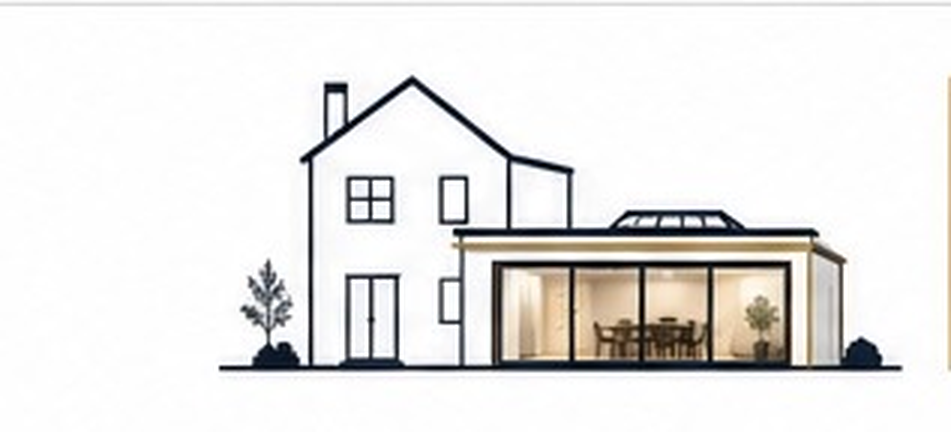
Most single-storey rear extensions are built to bring in light and open the house to the garden. That tends to mean wide sliding or bifold doors, a fixed picture window or two, and often a rooflight. Aluminium suits that brief for three reasons:
- Slim sightlines. Strong frames let the glass do more of the work.
- Low maintenance on exposed elevations. A south-facing rear wall takes sun, rain and weather. Powder-coated aluminium shrugs that off.
- Spans. It copes with the large openings that make an extension feel generous.
Timber is the better call when the extension needs to blend into an older house, for example Victorian brickwork with painted sash windows next door. Timber frames in the new part can echo what is already there. If the house is in a conservation area, check the council’s view on materials for the extension as well as for any replacements to the original house.
A mixed approach is common and perfectly respectable: keep or restore timber windows on the original house and use aluminium doors and glazing in the new extension. The contrast reads as deliberate when frame colours are chosen well.
Whatever you choose, the glazing is part of how the extension complies with Building Regulations. Our guide to building regs for extensions in England explains the completion certificate. If you are planning a side-facing window, the 1.7m privacy rule checklist matters too. And for daylight, see our rooflight sizing guide.
Environmental impact
Neither material is a clear winner, and anyone who tells you otherwise is simplifying. Life-cycle researchers found the best frame material depends on context, including how long the window really lasts and whether the material is recycled at the end. Aluminium can score well where recycling is strong. Timber stores carbon and has the least variable performance across the scenarios studied.
In practice: a timber window that is maintained and survives 50 years or more has a strong case. An aluminium window with a recycled-content frame and a long, trouble-free life also does well. A window of either kind that is replaced after 15 years does not.
A quick decision guide
| If this describes you | Lean towards |
|---|---|
| Listed building or conservation area | Timber, subject to council approval |
| Large glazed openings in a rear extension | Aluminium |
| You want the lowest upkeep | Aluminium |
| You want to repaint in a new colour in future | Timber |
| Tight budget per window | Aluminium, in most cases |
| Matching existing period windows | Timber |
| Passivhaus-level performance | Timber or aluminium-clad timber |
Our view on windows in an extension
We design and build single-storey rear extensions, so windows and glazed doors are part of almost every project we plan. The same questions come up again and again.
First, homeowners tend to fix on the frame material before they have settled the layout. We would do it the other way round. Decide how much light you need, where the garden doors go and how the new room meets the old one. The material choice then becomes much clearer, and a live 3D model helps because you can see sightlines and proportions before anything is ordered.
Second, glazing should be treated as part of the thermal design, not as an add-on. A beautiful frame with a poor whole-window U-value costs you every winter.

Third, for the typical rear extension on a post-war house, we would point most people towards thermally broken aluminium on the big openings, with a timber option considered where the existing house demands it. Planning route and building control are managed for you in our process, so any material question that touches consent is dealt with early, not discovered late.
Fixed pricing is the other point. When the VAT-inclusive price is set up front, you are not surprised by a glazing upgrade halfway through.
— Esskay
Getting your extension priced with the glazing you want
If you are weighing windows because an extension is on the cards, you can design and price your rear extension online with our instant quote tool. You see the 3D model, you get a fixed VAT-inclusive price, and there are no sales visits. Booking carries a £499 one-off booking fee, and our work comes with a 12-month workmanship warranty. For the full picture of what we do, start at our single-storey rear extension page.
FAQ
Are aluminium windows cheaper than timber?
Usually, yes. One 2026 comparison puts fitted aluminium casements at £540 to £1,350 and timber at £760 to £1,900. The gap narrows or reverses for high-specification aluminium, large sliding doors or aluminium-clad timber, so get quotes for your own sizes and styles.
What are the disadvantages of timber windows?
The main ones are upkeep and cost. Timber needs repainting or restaining about every 5 to 8 years, and neglect leads to rot. It is also usually dearer than aluminium upfront. In return it can be repaired in sections, and it is often the only material a conservation officer will accept.
Are timber windows worth it?
They can be, if you value longevity, repairability and period character, and you accept the maintenance. Industry sources suggest well-kept timber can last 60 to 100 years, though that figure comes from a timber trade body. For a modern extension with big glazed openings, aluminium often makes more sense.
Are aluminium windows good for a house?
Yes, particularly for contemporary homes and extensions. Modern thermally broken frames are strong, low maintenance and can meet current U-value requirements. They are less suited to heritage properties where planners expect timber profiles.
Sources
- DoubleGlazingCostCalculator: Aluminium vs Timber Windows, 2026
- DoubleGlazingCostCalculator: Timber Windows, The Complete 2026 Guide
- DoubleGlazingCostCalculator: Building Regs Part L for Windows, 2026
- The Specifier’s Guide to Timber Windows
- Hastings Borough Council: Replacement Doors and Windows for Listed Buildings and Conservation Areas
- The influence of durability and recycling on life cycle impacts of window frame assemblies, Springer