
Build over agreement: your complete 2026 guide
Discover the essentials of a build over agreement. Ensure a smooth construction project and protect yourself from costly legal issues.

Build over agreement: your complete 2026 guide
A build over agreement is a formal legal consent you must obtain from your water authority before constructing any structure within close proximity of a public sewer. Without it, you risk enforcement action, demolition orders, and full personal liability for any sewer damage. For homeowners in Aldershot planning a rear extension, understanding this requirement before breaking ground is not optional. It is the difference between a smooth build and a costly legal dispute.
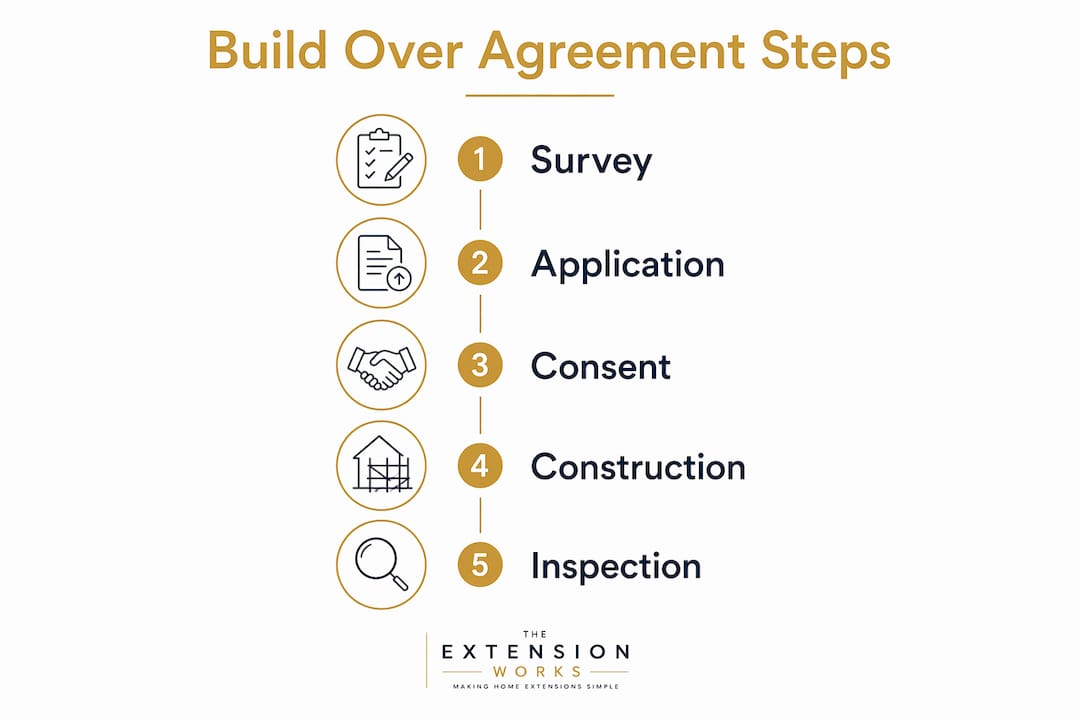
What is a build over agreement and when do you need one?
A build over agreement is a legal contract between you and your local water authority. It grants the authority permanent access rights to the sewer beneath or near your proposed structure, while setting out the conditions under which you may build. The Water Industry Act 1991 is the governing legislation, and it gives water authorities the power to enforce these requirements across England and Wales.
Construction within 3 metres of a public sewer, or within 1 metre of a public lateral drain, triggers the legal requirement for a build over agreement. This applies to extensions, conservatories, permanent walls, and any other structure that falls within those distances. The rule exists to protect the sewer infrastructure and preserve the authority’s ability to carry out future maintenance and repairs.
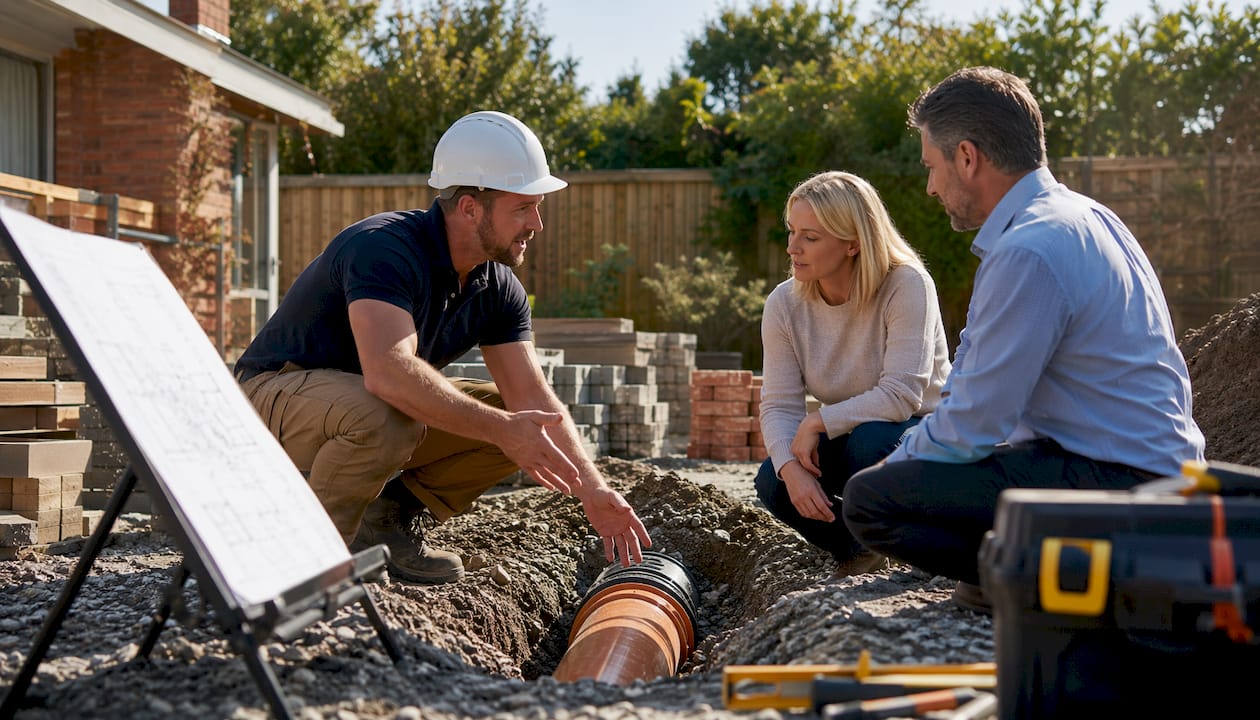
A common point of confusion is the difference between planning permission and build over consent. These are entirely separate legal processes. You can hold full planning permission for your extension and still be in breach of the Water Industry Act 1991 if you have not secured a build over agreement. Aldershot homeowners served by Thames Water, or neighbouring authorities, must apply directly to the relevant utility before any groundworks begin.
Where building within the sewer footprint is genuinely impractical, you may instead apply to divert the sewer under Section 18 of the Water Industry Act 1991. This is a complex and costly process requiring detailed technical justification, and it is rarely the preferred route for standard residential extensions.
Key legal thresholds at a glance
| Scenario | Distance trigger | Consent required |
|---|---|---|
| Building over a public sewer | Within 3 metres | Build over agreement |
| Building near a lateral drain | Within 1 metre | Build over agreement |
| Sewer diversion required | Not practical to build over | Section 18 application |
| Manhole within building footprint | Any distance | Access maintenance plan |
What does the application process involve?
The application process follows a clear sequence, and starting it early saves significant time. Most water authorities, including Thames Water, require a pre-application enquiry before you submit a full package. This initial step helps identify whether your project falls within the standard protocol or requires a more complex assessment.
The full application requires a technical evidence package. Documents required include site and location plans, proposed floor plans, cross-sectional drawings showing foundation depths relative to the sewer, and a pre-construction CCTV survey report. Designs must meet the Water UK Design and Construction Guide standards, which set out minimum clearance and structural requirements.
- Commission a drainage survey to locate all public sewers on or near your plot.
- Engage a structural engineer to produce compliant foundation drawings.
- Arrange a pre-construction CCTV survey to establish the sewer’s baseline condition.
- Submit the technical evidence package to your water authority or local building control.
- Await approval, which typically takes 2–5 weeks, with fees ranging from £300 to £1,300.
- Carry out construction in line with the agreed conditions.
- Commission a post-construction CCTV survey to confirm no damage occurred.
Pre- and post-construction CCTV surveys protect both you and the water authority. They create a clear record of the sewer’s condition before and after works, which limits future disputes over liability. The surveys typically cost between £250 and £450, depending on the length and accessibility of the pipe.
Local building control bodies in England can handle some build over agreement approvals under protocol agreements, which can speed up the process. However, this protocol service is not available for large, deep, or heavily loaded pipes. In those cases, you must apply directly to the water authority.
Pro Tip: Commission your drainage survey at the same time as your initial architectural drawings. Discovering a sewer mid-design forces costly revisions. Finding it at the start shapes the design from day one.
What design and construction restrictions apply?
The structural requirements imposed by a build over agreement are specific and non-negotiable. Standard trench foundations are rarely permitted directly over a sewer. Instead, bridging foundations that transfer the building load around the pipe are mandated, maintaining a minimum clearance of 150mm between the underside of the foundation and the top of the sewer pipe.
Specialist structural engineering is almost always required for these projects. Bespoke foundation designs such as bridging slabs, lintel bridging systems, or pile and beam arrangements are engineered to carry the load of the new structure without placing any weight on the sewer below. Your structural engineer must demonstrate compliance with the minimum clearance standards in the drawings submitted with your application. You can read more about foundation types for extensions to understand which systems suit different ground conditions.
Key design restrictions to plan around:
- No piling directly over or immediately adjacent to the sewer pipe.
- Minimum 150mm clearance between the foundation underside and the sewer crown.
- No load transfer onto the sewer pipe or its surround.
- Manhole access must be maintained. If a manhole falls within the building footprint, access must be preserved via relocation or a recessed chamber design.
- Inspection chambers must remain accessible for future maintenance.
Pro Tip: Ask your structural engineer to confirm in writing that the foundation design meets Water UK Design and Construction Guide standards before you submit. Amendments after submission add weeks to your timeline.
What are the risks of building without a build over agreement?
Building without a required agreement is a criminal offence under the Water Industry Act 1991. Water authorities can demand removal or modification of the structure at your expense, and they have no legal obligation to reinstate your property after carrying out sewer repairs.
“Most homeowners do not realise that building without a build over agreement transfers all damage liability to themselves. If the water authority needs to access the sewer for repairs, they can excavate through your extension floor, and you bear the full cost of making good afterwards.”
The financial consequences extend beyond repair bills. A property sold without the correct build over consent can fail conveyancing checks. Mortgage lenders treat an unauthorised build over a sewer as a material defect, which can block a sale or force a significant price reduction. Indemnity insurance exists as a partial remedy, but it does not remove the underlying legal risk and many insurers will not cover structures built in knowing breach of the Act.
Planning permission does not substitute for build over consent. These are separate legal requirements, and holding one does not satisfy the other. This is the single most common misconception among homeowners who have already received planning approval and assume they are clear to build. Reviewing your home insurance renovation cover before works begin is also advisable, as standard policies often exclude sewer-related damage during construction.
How to manage a build over agreement during your extension project
Getting the process right comes down to sequencing. Start sewer checks before you finalise your design, not after. An early drainage survey tells you exactly where public sewers run across your plot, which directly informs your architect’s layout decisions and prevents expensive redesigns later.
- Locate all sewers early. Commission a drainage survey as part of your initial site investigation, before architectural drawings are finalised.
- Appoint a structural engineer with BOA experience. Not all engineers are familiar with Water UK standards. Confirm their experience with build over projects before appointing.
- Coordinate with building control and your water authority. Establish early contact to clarify whether the protocol route or a direct application is appropriate for your project.
- Prepare a complete application package. Incomplete submissions are the leading cause of delays. Include all plans, cross-sections, and CCTV reports in your first submission.
- Monitor conditions during construction. Your contractor must follow the approved foundation design precisely. Any deviation can invalidate the agreement.
- Book the post-construction CCTV survey promptly. This closes out the agreement and protects you from future liability claims.
Hiring a contractor who understands build over agreement compliance is as important as the application itself. Contractors unfamiliar with the restrictions can inadvertently breach the agreed conditions during groundworks, creating liability even after approval has been granted. The Extension Works manages the full extension process in-house, including coordination with planning and regulatory requirements, which reduces the risk of compliance gaps on site. Understanding permitted development rules alongside your BOA conditions gives you a complete picture of what you can build and how.
Pro Tip: A build over agreement is a restrictive legal contract granting the water authority permanent access rights. Seek independent legal advice before signing, particularly if the agreement contains unusual access or reinstatement clauses.
Key takeaways
Securing a build over agreement before construction is the single most important step for any homeowner building near a public sewer, and skipping it creates legal, financial, and structural risks that no planning permission can resolve.
| Point | Details |
|---|---|
| Legal trigger distances | Construction within 3 metres of a public sewer or 1 metre of a lateral drain requires formal consent. |
| Application timeline and cost | Approval typically takes 2–5 weeks and costs £300–£1,300, plus £250–£450 for CCTV surveys. |
| Foundation design requirements | Bridging foundations with at least 150mm clearance above the sewer are mandatory. |
| Risk of building without consent | Unauthorised construction is a criminal offence and can block property sales or mortgage approvals. |
| Start sewer checks early | Commission a drainage survey before finalising architectural drawings to avoid costly redesigns. |
Why homeowners consistently underestimate the BOA process
The most common mistake I see is homeowners treating the build over agreement as an afterthought. They secure planning permission, appoint a builder, and only discover the sewer issue when groundworks begin. At that point, the project stalls for weeks while the application is assembled under pressure, and the builder’s programme falls apart.
The second mistake is assuming the process is straightforward enough to manage without specialist input. The Water UK Design and Construction Guide is a technical document. Foundation drawings that do not meet its standards are rejected, and resubmissions add months to a project. I have seen extensions delayed by a full season because the structural engineer was not familiar with bridging foundation requirements.
My honest advice is this: treat the build over agreement as a design constraint, not a bureaucratic hurdle. When you know where the sewer runs and what the foundation must look like, you design around it from the start. The result is a cleaner application, a faster approval, and a build that does not carry hidden legal risk into the future. Proactive planning is always cheaper than reactive problem-solving.
— Esskay
Planning your Aldershot extension with confidence
Rear extensions in Aldershot often sit on plots with older drainage infrastructure, where public sewers run closer to property boundaries than homeowners expect. The Extension Works combines design, planning, and construction into one managed process, which means sewer-related constraints are identified and addressed before they become problems on site.

The Extension Works offers an instant extension quote that gives you a fixed, VAT-inclusive price from the outset, with a dedicated team managing every stage from initial drawings to final sign-off. That includes coordinating with local authorities on planning and regulatory requirements. If you are ready to see what your extension could look like, visit The Extension Works and get your quote online today.
FAQ
What is a build over agreement?
A build over agreement is a formal legal consent from your water authority permitting construction within 3 metres of a public sewer or 1 metre of a lateral drain. It sets out the structural conditions you must meet and grants the authority permanent access rights to the sewer.
Do I need a build over agreement for a conservatory?
Yes. A conservatory is a permanent structure and falls within the same legal requirements as a full extension under the Water Industry Act 1991. If it sits within 3 metres of a public sewer, a build over agreement is required before construction begins.
How long does a build over agreement take to approve?
The approval process typically takes 2–5 weeks from submission of a complete application. Incomplete packages are the most common cause of delays, so submitting all required documents in your first application is critical.
Does planning permission cover a build over agreement?
No. Planning permission and build over consent are entirely separate legal requirements. Holding planning permission does not authorise construction over or near a public sewer. You must obtain both independently before work begins.
What happens if I build without a build over agreement?
Building without consent is a criminal offence. The water authority can require demolition or modification at your cost, and you bear full liability for any sewer damage. The absence of a valid agreement can also prevent a future property sale from completing.
Recommended
- Foundations for extensions: the complete UK guide — The Extension Works
- Building work hours: a homeowner’s guide to faster extensions — The Extension Works
- Permitted Development & Extension Rules 2026 — How Big Can You Build? | The Extension Works
- Home insurance renovation: what you need to know — The Extension Works