
What a workmanship warranty from builders actually covers
Discover what a workmanship warranty from builders covers, including defects and how it differs from structural guarantees. Learn more!

What a workmanship warranty from builders actually covers
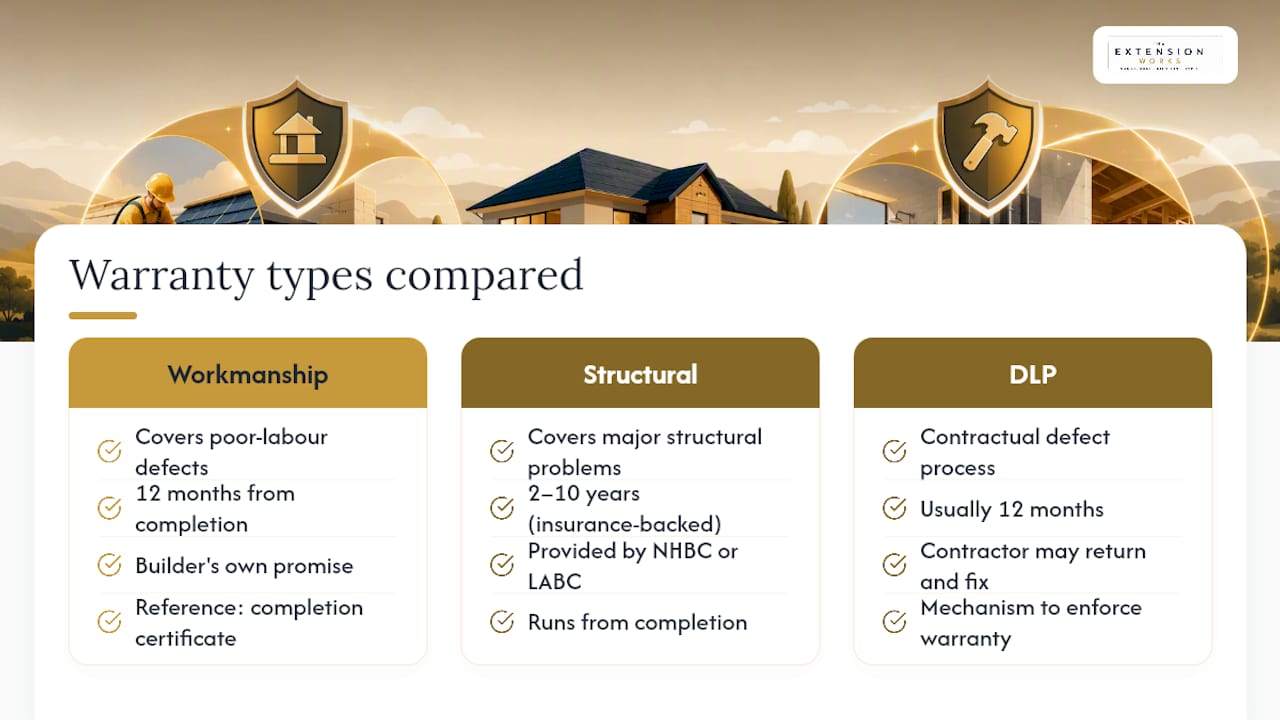
Most builders give you a 12-month workmanship warranty (sometimes called a rectification period) covering finishing and installation defects. This runs separately from any structural warranty, which is a different product entirely.
Structural or insurance-backed guarantees from providers such as NHBC, LABC, or FMB Insurance cover major structural problems and can run for 2, 6 or 10 years. Beyond both of these sits the law itself: under the Limitation Act 1980, you typically have up to six years from the date of breach to bring a contract claim in England, regardless of what your paperwork says.
Three things you need to keep straight:
- Workmanship warranty: 12 months, covers finishing and installation faults, provided by the builder directly.
- Structural/insurance-backed warranty: 2 to 10 years, covers major structural failure, provided by a specialist insurer.
- Statutory limitation period: up to six years for breach of contract claims, set by law and running regardless of your contract’s wording.
Key Takeaways
A workmanship warranty typically covers finishing and installation defects for 12 months, while structural cover and statutory limitation periods extend protection far beyond that window.
| Point | Details |
|---|---|
| Workmanship cover is short | Twelve months is the industry norm for finishing and installation defects, not structural faults. |
| Structural warranties run longer | Insurance-backed guarantees from providers like NHBC or FMB can cover structural issues for 2 to 10 years. |
| The law extends beyond your contract | The Limitation Act 1980 gives you up to six years to bring a contract claim, regardless of warranty length. |
| Evidence beats memory | Photograph, date, and log every defect in writing the week you notice it, not months later. |
| The Extension Works includes warranty by default | Every project comes with a 12-month workmanship warranty, fixed pricing, and in-house project management from start to sign-off. |
Table of Contents
- What does a workmanship warranty cover?
- How long does a builder’s warranty actually last?
- What is a defects liability period and how does it work?
- How do you report a defect and make a claim?
- What legal remedies exist if a builder won’t fix a defect?
- Checklist: how to check a builder’s warranty before you book
- The gap between what warranties promise and what homeowners actually do
- Get a fixed-price extension with a 12-month workmanship warranty built in
- Frequently asked questions
- Sources
What does a workmanship warranty cover?
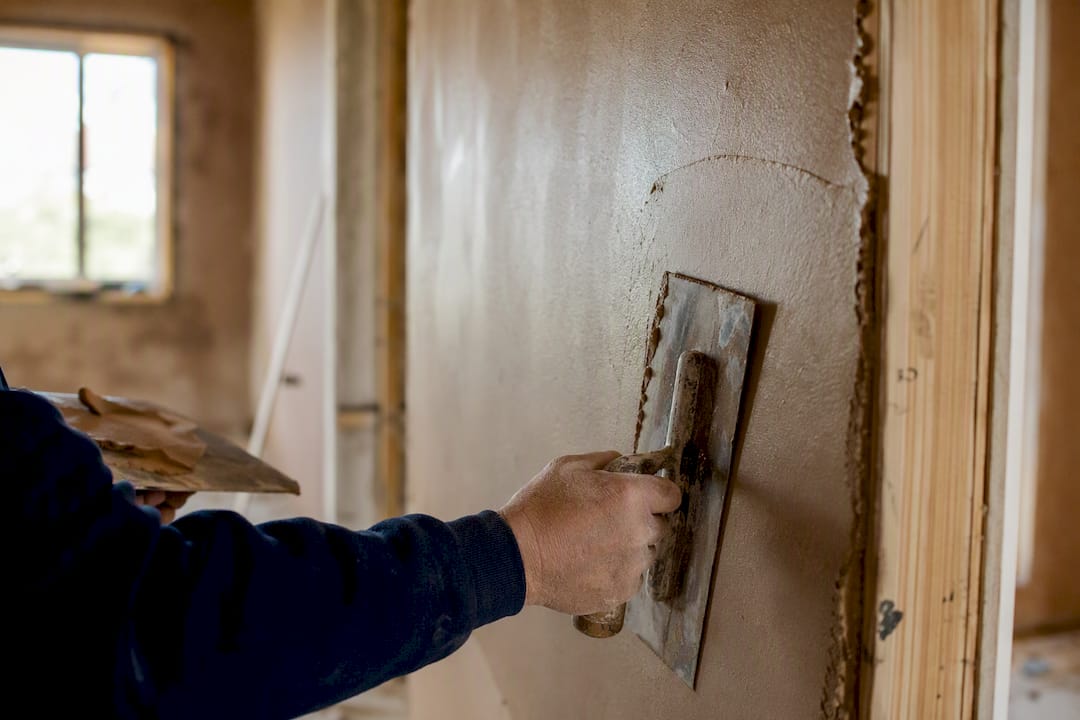
A workmanship warranty covers the quality of the labour, not the materials or the design. Think poorly sealed shower trays, doors that won’t close square, uneven plaster, or tiling that’s come away at the grout line within months of completion. These are workmanship faults: things that went wrong because of how the work was done, not what it was made from.
Structural defects and material failures sit outside this. A cracked lintel or subsidence issue is a structural matter, and liability there depends on whether your contractor was design-and-build (carrying design responsibility too) or construct-only, where responsibility for workmanship is narrower.
Common exclusions you’ll find in most warranties:
- General wear and tear from normal use over time.
- Damage caused by misuse, poor maintenance, or a third party.
- Consequential damage (a leak that later damages flooring you didn’t ask the builder to fix).
- Items already under a manufacturer’s guarantee, such as a boiler or a set of bifold doors.
How long does a builder’s warranty actually last?
Twelve months is the industry norm for a workmanship guarantee on domestic building work, and it’s echoed consistently across trade forums and consumer guidance for smaller building projects. That clock usually starts at practical completion or sign-off, not the day work began, so check your contract for the exact trigger date.
Structural cover works differently and lasts far longer:
- Insurance-backed guarantees from providers like FMB Insurance often split into an early defects phase followed by extended structural cover running up to ten years.
- New-build and larger development warranties through NHBC or LABC Warranty are frequently required by mortgage lenders and tend to bundle a 2-year builder liability period with a 10-year structural insurance period.
- Smaller domestic extensions rarely carry this level of cover unless the builder specifically arranges an insurance-backed guarantee alongside the standard workmanship period.
Reporting promptly matters more than most homeowners realise. Miss the 12-month window on a genuine workmanship fault, and you may find yourself relying on the six-year contractual limitation period instead, which is a slower, costlier route.
What is a defects liability period and how does it work?
A defects liability period, or DLP, is the contractual mechanism that sits underneath the warranty. It’s usually a 12-month window giving the contractor the right, and the obligation, to come back and fix anything you’ve notified them about, using procedures set out in the contract form itself, whether that’s JCT, NEC, or a bespoke agreement.
In practice, the DLP typically requires you to follow recommended steps outlined in this guide to managing electrical remedial works to ensure proper contractor access and communication.
- Give written notice of the defect as soon as it’s reasonably identified, not months later.
- Provide reasonable access so the contractor can inspect and carry out repairs.
- Allow a reasonable timescale for the fix, rather than demanding same-day resolution.
Refuse access or bring in a different contractor before giving the original builder a fair chance to return, and you risk weakening your own claim. Courts and adjudicators generally expect you to mitigate loss, not escalate costs unnecessarily, and a defined notice and repair process benefits both sides far more than an ad hoc argument on the doorstep.
Pro Tip: Keep a single running document, a simple table with dates, photos, and what was said, rather than scattering evidence across texts and emails. Adjudicators and insurers respond far better to a timeline than a pile of loose messages.
How do you report a defect and make a claim?
Move fast and keep it documented. Here’s the sequence that actually protects you:
- Photograph and video the defect the moment you spot it, including a wide shot for context and a close-up for detail.
- Note the date and, where relevant, the weather or conditions that revealed the fault (a leak after heavy rain, say).
- Send written notice following whatever process your contract specifies, by email if nothing else is stated, and keep a copy.
- Log every response, including dates of any visits, promises made, and who you spoke to.
- Contact your insurance-backed warranty provider if one applies, supplying your contract, completion certificate, and evidence together.
A few extra points worth flagging separately:
- Building control sign off on an extension, evidenced by a completion certificate, is often the reference point insurers ask for when confirming a project’s start date for warranty purposes.
- If the contractor has gone insolvent, stops responding entirely, or you suspect a latent defect that wasn’t visible at completion, that’s the point to bring in a solicitor or a chartered surveyor rather than continuing to chase alone.
What legal remedies exist if a builder won’t fix a defect?
Once the workmanship warranty and DLP have run their course, or if the builder simply won’t cooperate, the law still gives you options. The Limitation Act 1980 sets a six-year limitation period for most breach of contract claims in England, measured from the date the breach occurred, not from when you noticed it. That’s a materially longer window than any standard workmanship guarantee.
Subsequent purchasers face a trickier position, since they weren’t party to the original building contract. This is where collateral warranties and the Contracts (Rights of Third Parties) Act 1999 become relevant, allowing a later buyer to enforce rights under an earlier contract if one was properly assigned.
Other routes worth knowing:
- The Defective Premises Act 1972 can apply where work makes a dwelling unfit for habitation, though this is a narrower, more technical claim.
- Latent defects insurance pays out for damage without requiring proof of negligence, but policies carry significant excesses and cost, so they suit larger projects more than a single-storey extension.
- The Consumer Rights Act 2015 separately requires services to be carried out with reasonable care and skill, giving homeowners statutory protection that runs alongside, not instead of, any contractual warranty.
Checklist: how to check a builder’s warranty before you book
Before you sign anything, get these specifics in writing rather than taking a verbal assurance:
- The exact scope of the workmanship warranty (which trades and elements it covers).
- The start date trigger, whether that’s practical completion, sign-off, or building control certification.
- The written notification procedure for reporting a defect.
- Whether the warranty transfers to a new owner if you sell within the covered period.
- Whether any insurance-backed structural cover is included or available as an add-on, and its exclusions.
Red flags worth walking away from: no written warranty document at all, vague language like “we’ll sort any issues,” or a builder who resists putting terms on paper.
The Extension Works builds this into every project rather than treating it as an afterthought: a 12-month workmanship warranty, fixed VAT-inclusive pricing agreed upfront, live 3D modelling so you see the design before work starts, and in-house project management from first sketch to final sign-off, so there’s no handoff between separate designers, planners, and builders to complicate a defects claim later.
Pro Tip: Ask to see how structural elements were calculated, not just the finish specification. A provider who can show you the structural calculations behind your extension is one who takes the whole build seriously, not just the visible parts.
The gap between what warranties promise and what homeowners actually do
Most guidance on workmanship warranties focuses on what the document says. The bigger issue, in practice, is what homeowners do in the first two weeks after spotting a problem. People wait, hoping a hairline crack will settle or a sticking door will “bed in.” By the time they act, they’ve often lost the clearest evidence of when the defect appeared, which weakens a claim more than any small print ever could.
The conventional advice, “keep your paperwork safe,” undersells the real skill here: building a timeline as things happen, not reconstructing one from memory months later. A photo with a timestamp, sent the same week, carries far more weight with an insurer or adjudicator than a strongly worded letter six months on.
If there’s one thing worth prioritising above the wording of any warranty, it’s understanding your rectification period’s notice procedure before you need it. Read that clause the week you move back in, not the week something goes wrong. That single habit does more to protect a homeowner than any amount of warranty length ever will.
Get a fixed-price extension with a 12-month workmanship warranty built in
The Extension Works removes the guesswork from booking a rear extension by pricing, designing, and managing the whole project in-house, so your workmanship warranty comes from the same team that built your extension, not a subcontractor chain you’d need to chase separately.

You get an instant online quote, live 3D modelling to see the design before committing, and a fixed VAT-inclusive price agreed from the outset, all backed by the 12-month workmanship warranty covered throughout this guide. If you’re weighing up a single-storey rear extension in Sutton, Morden, or the surrounding area, get an instant quote and see the design, price, and warranty terms together before you commit to anything.
Frequently asked questions
What does a workmanship warranty typically cover? It covers defects caused by poor labour, such as leaking joints, uneven finishes, or badly fitted doors and windows, usually for 12 months from completion.
How is a structural warranty different from a workmanship warranty? A structural warranty is insurance-backed cover from a provider like NHBC or LABC Warranty, running 2 to 10 years for major structural problems, while a workmanship warranty is the builder’s own 12-month promise on finishing quality.
What is the defects liability period, and how does it differ from a warranty? The DLP is the contractual process, usually 12 months, that sets out how you notify defects and gives the contractor the right to return and fix them. The warranty is the promise itself; the DLP is the mechanism for enforcing it.
How long do I have to bring a legal claim if my builder won’t fix a defect? Under the Limitation Act 1980, you typically have up to six years from the date of breach to bring a contract claim in England, separate from any warranty period.
Does building control sign-off affect my warranty claim? Yes. The completion certificate from building control is often the reference point insurers and warranty providers use to confirm when your workmanship warranty period actually started.
Sources
- Limitation Act 1980
- Defects and rectifications (RICS)
- Defects liability periods (Pinsent Masons)
- FMB Building Work Guarantee