
Avoid Six Week Delays on Extensions Near TPOs in England
Practical England advice for homeowners: how Tree Preservation Orders affect extensions, when a six week notice can pause work, and which checks and...
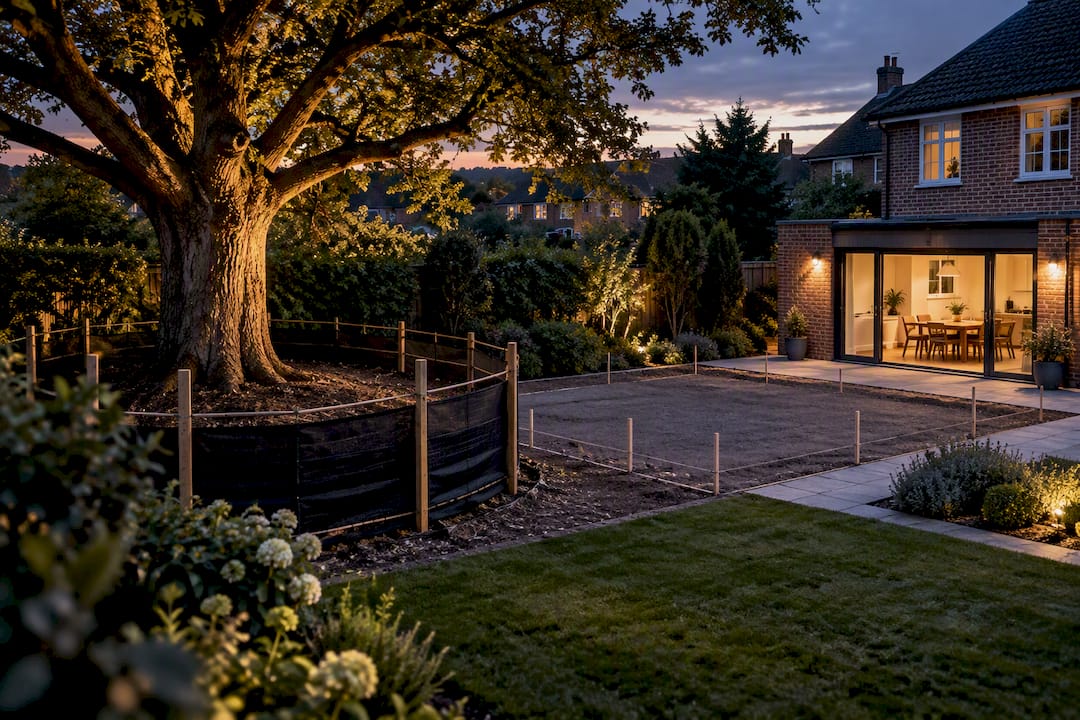
Avoid Six Week Delays on Extensions Near TPOs in England
A tree preservation order does not automatically stop your extension going ahead, but it does control what you can do to any protected tree standing in your way. If a tree sits on or near your plot, check with your local planning authority before you draw up plans, and commission a tree survey early so your design works around the roots rather than against them.
TL;DR:
- Tree preservation orders do not prevent construction but restrict damaging actions to protected trees without explicit council permission.
- A formal planning permission does not automatically authorize work on protected trees, which often require separate consent or conditions.
- Trees in conservation areas over 75mm in trunk diameter are protected by location alone, necessitating prior notice before any work.
- Root systems, not branches, primarily determine foundation design near protected trees, often leading to higher costs for specialized foundations.
- Early tree surveys, arboricultural reports, and site protection measures are essential to avoid delays, fines, or legal issues during extension projects.
Table of Contents
- What a tree preservation order (TPO) means for tpo and extensions
- Does planning permission override a TPO?
- Are trees in conservation areas protected without a TPO?
- How do you apply for consent to work on a protected tree?
- How do protected trees affect extension design and foundations?
- Practical steps before you commission an extension near a protected tree
- What happens if you breach a TPO, and can you appeal?
- How The Extension Works handles TPOs and tree issues on a project
- A fair way to think about trees and extensions
- Ready to start your extension with tree issues sorted from day one?
- Where to check tree status and read the official guidance
- Sources
- FAQ
What a tree preservation order (TPO) means for tpo and extensions
A tree preservation order is a legal order made by a local planning authority to protect a specific tree, a group of trees, or a whole woodland that provides value to the local area. Once a tree is covered, you cannot cut it down, top it, lop it, uproot it, or wilfully damage it without written consent from the council. That single rule is the whole story of tpo and extensions in practice: the order does not ban building work, it bans certain actions against the tree unless you have permission first.
It is worth being precise about scope. TPOs cover trees, tree groups, and woodlands. They do not cover hedges, shrubs, or bushes, so a garden boundary hedge blocking your extension footprint is a different problem entirely, governed by different rules. A single old oak at the back of a garden can be protected even when nothing else on the plot is.
Breach the order and the consequences are real. Unauthorised felling or damage to a protected tree can lead to prosecution, and courts can impose fines that scale with the value of the tree lost. For property developers working across several sites, a conviction also creates a paper trail that future planning applications will have to address. The legal basis for all of this sits in section 198 of the Town and Country Planning Act 1990, which gives local authorities the statutory power to make and enforce these orders.
Does planning permission override a TPO?
No. Getting planning permission for your extension and getting permission to touch a protected tree are two separate processes, and approval for one says nothing about the other. Many homeowners assume a granted planning application clears every obstacle on site, then discover a mature ash at the boundary is still legally untouchable.
Planning decisions frequently carry conditions specifically to protect trees, even where those trees have no TPO at all. A root protection area might be marked on the approved drawings, with construction activity banned inside that zone for the duration of the build. Some approvals require replacement planting if a tree genuinely has to come out, calculated to offset the amenity value lost. Guidance from the RSPB confirms that planning conditions can protect trees or demand replacement planting even when a formal order is absent, which catches out anyone who assumes an unprotected tree is a non-issue.
Permitted development rights work the same way. A single-storey rear extension might fall comfortably within permitted development limits on paper, yet a nearby TPO tree still needs separate consent if any part of the build, access route, or excavation would affect it. Checking the wording of any existing planning decision on your property matters here: conditions attached years ago sometimes still bind the site today, and discharging those conditions properly is its own process before work can start. Reference to gov.uk’s own TPO guidance confirms the same point: a grant of planning permission does not itself authorise work on a protected tree, and you may still need to apply to the council separately. If you are relying on permitted development to avoid a full application, read our guide on rear extension size limits alongside your tree checks, not instead of them.
Are trees in conservation areas protected without a TPO?
Yes, and this catches out a surprising number of people who search only for “TPO” and assume no order means no restriction. Any tree in a conservation area with a trunk diameter over 75mm is protected by virtue of location alone, regardless of whether a specific order has ever been made against it.
If you want to carry out work on such a tree, you must submit a section 211 notice to the local authority at least six weeks before work begins. That notice period exists specifically so the council can decide, during those six weeks, whether the tree merits a formal TPO before you touch it. Silence from the council does not always mean consent. Some authorities respond; others let the notice period lapse without objection, at which point work can proceed as described.
For a build with a tight schedule, this six-week window is worth building into your programme from day one rather than discovering it once contractors are booked. Submitting the notice the moment you confirm your extension design, well before groundworks are due, avoids the scenario where a six-week statutory pause collides with a fixed start date. If your property sits in a conservation area, factor this alongside the usual planning permission timeline for the wider project.
How do you apply for consent to work on a protected tree?
Once you know a tree is protected, either by a specific TPO or through conservation area status, the application to the local planning authority follows a fairly predictable pattern, though timescales and paperwork vary between councils.
- Confirm the tree’s status first. Check the council’s TPO register or interactive mapping tool, since many local authorities publish webGIS layers showing exactly which trees carry an order.
- Commission a tree survey. An arboricultural report from a qualified surveyor documents the tree’s species, condition, root spread, and amenity value, and forms the evidence base for whatever you are asking the council to allow.
- Submit the formal application. This is publicised in a similar way to a standard planning application, meaning neighbours and third parties can comment before a decision is made.
- Wait for the decision, and prepare to appeal if refused. Refusal comes with a right of appeal, though success depends heavily on the strength of your arboricultural evidence.
Costs vary by consultant and region, but expect to budget separately for the tree survey itself, a written arboricultural method statement if works are near the tree, and any agent fees if you use a planning consultant to manage the submission alongside your main application. Add these to your general expectations around planning fees for an extension, because tree-related costs sit outside the standard application fee and catch some homeowners off guard. Timescales for the tree consent itself typically run in parallel with, or slightly behind, the main planning decision, so building in a buffer of several weeks is sensible rather than optimistic.
How do protected trees affect extension design and foundations?
Root systems, not branches, cause most of the genuine engineering headaches on a build near a protected tree. A BS 5837 tree survey, commissioned before your architect finalises a layout, plots root protection zones that then dictate where foundations, drainage runs, and even scaffolding can safely sit. Doing this survey early, at pre-application stage, lets your designer test two or three layout options against those constraints instead of redesigning after the council flags a problem.
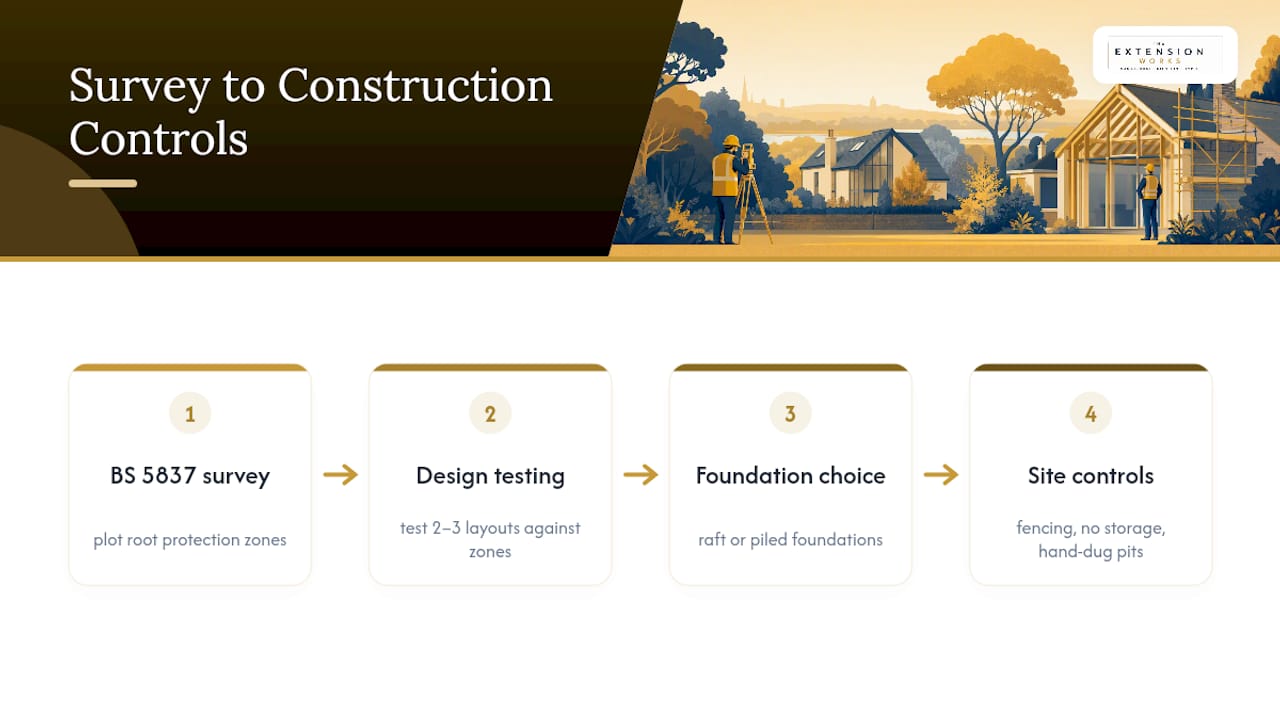
Soil type and tree proximity together determine foundation depth and design. Clay soils shrink as tree roots draw out moisture, and a mature oak or willow close to a new footing can cause seasonal ground movement that standard strip foundations were never designed to handle. Where significant roots are unavoidable, structural engineers typically move to one of two solutions: a raft foundation designed to reduce excavation depth and tolerate some ground flex, or piled foundations that bypass the unstable upper soil layer entirely and bear on more stable ground below. Both cost more than a conventional trench footing, and both add time to the structural design stage, so budgeting for that uplift early avoids an unpleasant surprise at tender. Our guide to structural calculations for extensions covers how engineers translate these site constraints into an actual specification.
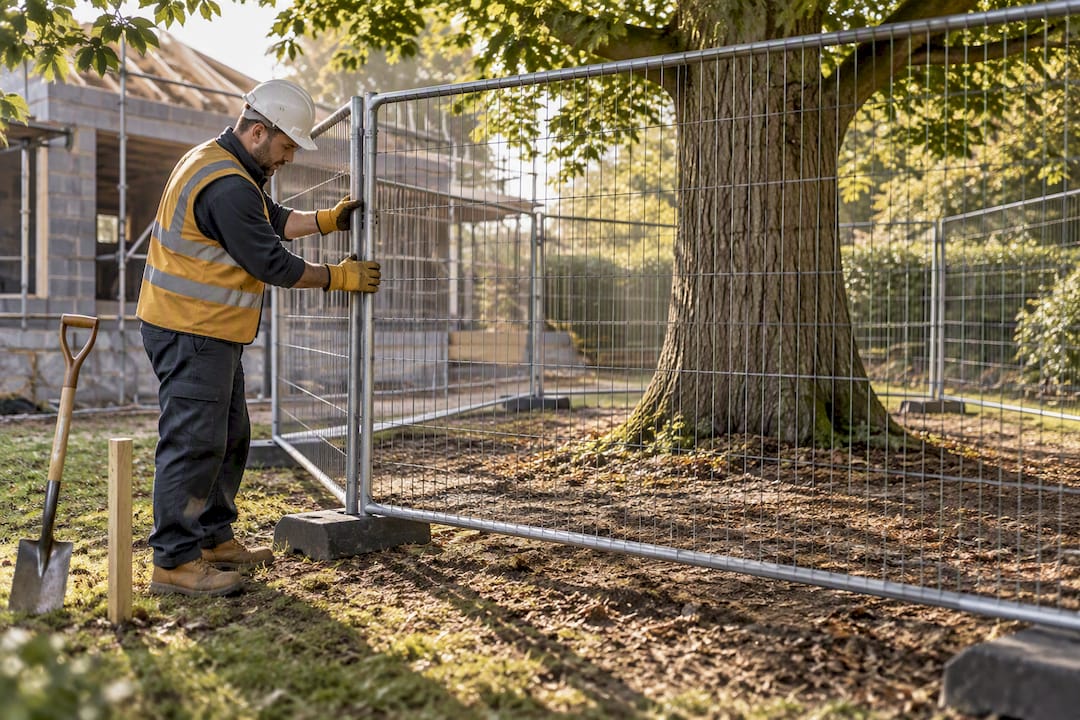
On site, protection usually means physical fencing around the root protection area for the duration of construction, no material storage or vehicle movement within that zone, and hand-dug trial pits near the tree instead of mechanical excavation. Larger or more sensitive projects sometimes require an arboriculturalist to attend site at key stages, checking that agreed protective measures are actually being followed once diggers arrive, not just specified on paper.
Practical steps before you commission an extension near a protected tree
Getting the sequence right saves weeks. Start with these checks before a single drawing gets commissioned:
- Search your council’s TPO map or register to confirm whether any tree on or near your plot carries an order.
- Re-read the wording of any existing planning permission on the property for tree-related conditions you might have forgotten about.
- Confirm whether your property sits within a conservation area, which brings trees into scope even without a specific TPO.
- Commission a tree survey and, if needed, an arboriculturalist’s report before finalising your extension layout.
- Brief your architect or structural designer on the root protection zone so foundation options are assessed against it from the outset, not retrofitted later.
- Build tree protection measures, fencing lines, and access restrictions directly into the drawings submitted for planning and building control.
- Plan site access and material delivery routes around the protected root zone rather than through it.
Pro Tip: Commission the tree survey before you brief your architect, not after. A layout drawn without root protection data almost always needs revising once the survey lands, and that revision costs more in fees and time than the survey itself.
If you need to store materials or arrange a skip during the build, plan that logistics separately from your tree protection zone. Skip permits and site access planning should account for any fenced-off root protection area from the start, since a skip parked over root protection ground is exactly the kind of oversight that triggers a council enforcement visit.
What happens if you breach a TPO, and can you appeal?
Unauthorised work on a protected tree is treated seriously. Enforcement typically starts with an investigation once a council becomes aware of the damage, often prompted by a neighbour’s complaint, and can end in prosecution with fines set against the tree’s amenity value. Beyond the legal penalty, councils can also require replacement planting at the owner’s expense, adding cost on top of any fine.
If you believe a tree no longer merits protection, perhaps it is diseased, dead, or dying, you can apply to the LPA to modify or revoke the order, but the bar is genuinely high. Success depends on convincing evidence, usually a professional arboricultural report, that the tree’s condition or amenity value has changed enough to justify lifting protection. Removal on the basis of inconvenience alone almost never succeeds; redesigning the extension around the tree is very often the more realistic path, and frequently the cheaper one once legal and consultancy costs are weighed against a redesign fee.
Where an application to work on a tree is refused, you have a formal right of appeal, though the same evidential bar applies. Before escalating to a formal dispute, it is worth exploring mediation with the council or a retrospective application if works have already started in error. Neighbours who raised the original objection are sometimes willing to reach a practical compromise once protective measures are demonstrated on paper.
How The Extension Works handles TPOs and tree issues on a project
Tree checks happen at the very start of a project with The Extension Works, before design commitments are locked in, because a root protection zone discovered halfway through a drawing revision costs everyone time. The in-house team coordinates the LPA submission, any section 211 notice where a conservation area applies, and the main planning application together, rather than treating tree consent as an afterthought bolted onto a finished design.
Live 3D modelling lets you test how a layout shifts around a protected root zone before anything is finalised on paper, which matters when a raft foundation or a repositioned footprint changes the room proportions you were expecting. A single point of contact manages the tree consent, the planning submission, and the build programme as one coordinated process rather than three separate relationships to chase.
If you are talking to any contractor about a site with a protected tree, ask directly how they handle root protection zones on the drawings, who commissions the arboricultural report, and whether tree consent timescales are built into the quoted programme. The answers tell you quickly whether tree issues will be managed or discovered.
A fair way to think about trees and extensions
Most projects near protected trees proceed without drama, provided the tree survey happens early and the design responds to what it finds. Redesigning a footprint around a root protection zone is almost always cheaper and faster than trying to argue a tree should be removed, and councils know this too, which is why revocation applications face such a high evidential bar.
Costs for surveys and method statements are real but modest against a typical extension budget, and they buy certainty rather than risk. Homeowners who engage early, get a proper arboricultural report, and let their designer work with the constraint rather than around it tend to have the smoothest path through planning. Treat the tree as a design input from day one, not an obstacle to negotiate away at the end.
— Esskay
Ready to start your extension with tree issues sorted from day one?
The Extension Works is the alternative to juggling separate architects, planning consultants, and builders when a protected tree sits on your plot: one in-house team manages the tree checks, the planning submission, and the build together, so nothing falls between the cracks. You get a fixed VAT-inclusive price for your single-storey rear extension, live 3D modelling to see exactly how the design responds to any root protection zone, and a 12-month workmanship warranty once the build is complete.

Statutory tree consents and surveys remain the responsibility of your local planning authority, and The Extension Works coordinates those steps on your behalf rather than replacing them. Start with an instant online quote to see indicative pricing for your rear extension, and if a tree survey or TPO check is needed on your site, that gets factored into your project plan from the outset. A 499 GBP booking fee secures your project slot and moves you into the design phase, where tree constraints, foundation choices, and planning strategy are worked through together rather than in isolation.
Where to check tree status and read the official guidance
Before committing to a design, verify tree status directly through official channels rather than relying on assumptions from a previous owner or estate agent.
- Gov sets out the legal definitions, consent process, and enforcement penalties in full.
- The RSPB’s planning advice on tree protections explains how planning conditions can protect trees even without a formal order.
- Your own council’s website almost always hosts a TPO map or register; search “[your council name] tree preservation order map” to find it directly.
Sources
- Gov
- What protections do trees have when it comes to planning? - RSPB
- Legislation
- Building near trees - Horsham District Council technical guidance
FAQ
What is the 50% rule for house extensions?
The 50% rule refers to permitted development limits on outbuildings and extensions, broadly restricting how much of your garden or curtilage can be covered by additions without full planning permission. It is separate from tree protection rules entirely. A tree on the remaining land can still require its own consent regardless of how much garden coverage your extension uses.
How can I check if a tree has a tree preservation order?
Search your local council’s TPO register or interactive map, which many authorities publish online showing exactly which trees and areas carry protection. If your council does not publish a map, contact the planning department directly and ask for written confirmation before finalising your extension design.
What are the planning regulations for extensions in England?
Extension planning in England runs through either full planning permission or permitted development rights, depending on the size and position of the build, with separate rules governing conservation areas and listed buildings. Tree protection sits alongside these rules as an additional layer, meaning a project that qualifies for permitted development can still need separate consent to work near a protected tree, as gov.uk’s TPO guidance confirms.
How close can a neighbour’s extension be to my house?
Distance rules depend on the type of planning route used and whether the neighbour consultation scheme applies to their specific project. If a protected tree sits near the boundary between two properties, both neighbours’ building plans may need to account for the same root protection zone, which is worth raising directly with your neighbour if their extension is being planned around the same tree as yours.
Does The Extension Works handle tree surveys and TPO applications?
The Extension Works coordinates tree checks and the resulting planning submissions as part of its managed design and build service for single-storey rear extensions, working alongside the statutory process run by your local planning authority. Statutory consents and surveys themselves remain the LPA’s decision, but the project team manages the paperwork, timing, and design response so it fits your build programme.